Sixth Form Class of 2018
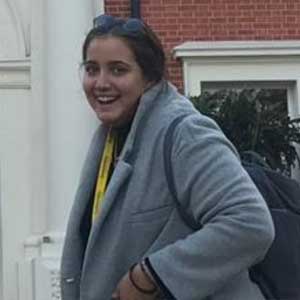
Alyssa Jinks
Studying Popular Music at Goldsmiths is everything I had hoped for, and more. It’s a tough and extremely hectic course but I’m learning new things every day. Studying my choice of A Level subjects definitely helped lead me on the right path.
Goldsmiths College University of London –
Popular Music
Form 5M, Class of 2013
Lim Pei Ling
At Sekolah Sri Tenby, the most impactful thing I learnt was not to be afraid to try new things. My teachers were very encouraging and helped me overcome my weaknesses and enhance my strengths.
Drake University -
Actuarial Science
Form 5M, Class of 2015
Alice Voong Shew Yin
I am so grateful for the time I spent in Sekolah Sri Tenby. Instead of following the mainstream blindly, the teachers encouraged me to explore my own possibilities and trust my own instincts. Thanks to that, I am currently pursuing my dream to explore the business world.
Sunway University -
BSc (Hons) in Accounting and Finance
Scholarship: Sunway Special Scholarship & Jeffrey Cheah Continuing Scholarship
Sixth Form Class of 2018
Lydia Heng
I hadn't anticipated the large volume of independent research, formation and structure of essays, citation styles and review articles required in university...A Levels has prepared me well for these challenges!
Deakin University –
Sports Science
Sixth Form Class of 2018
Andrew Wong
A Levels gave me the basic but crucial knowledge in Science, which laid the groundwork for my university studies.
Technical University Eindhoven Automotive -
(Electrical) Engineering
Sixth Form, Class of 2017
Aleena Jeremiah
A Levels has helped me develop strong analytical skills. This has definitely come in handy while studying university-level Law.
The University of Liverpool -
Law
Sixth Form, Class of 2017
Andrea Hare
Taking A Levels has given me the freedom and flexibility to explore my interests. I had the time to try my hand with some topics that interested me. Eventually, this led me to apply for a course in Fine Art.
Monash University –
Fine Art
Sixth Form, Class of 2017
Timothy Lo
The time I spent studying A Levels at Tenby has helped me shift the way I design solutions to problems.
Coventry University –
Automotive Engineering




















Social Media