Latest News & Events

National Curriculum of England

Overview

Curriculum Stage Age Assessment & Examinations
International Primary curriculum (IPC) Foundation 3 to 5 Teacher assessment of early learning goals
International Primary curriculum (IPC) Primary
(Key Stage 1& 2)
5 to 11 -
Cambridge Lower Secondary Programme and National Curriculum of England adapted for international students Secondary
(Key Stage 3)
11 to 14 Cambridge Checkpoint Tests (English, Maths and Science)
National Curriculum of England adapted for international students Secondary
(Key Stage 4)
14 to 16 International General Certificate of Secondary Education (IGCSE)

Kindergarten

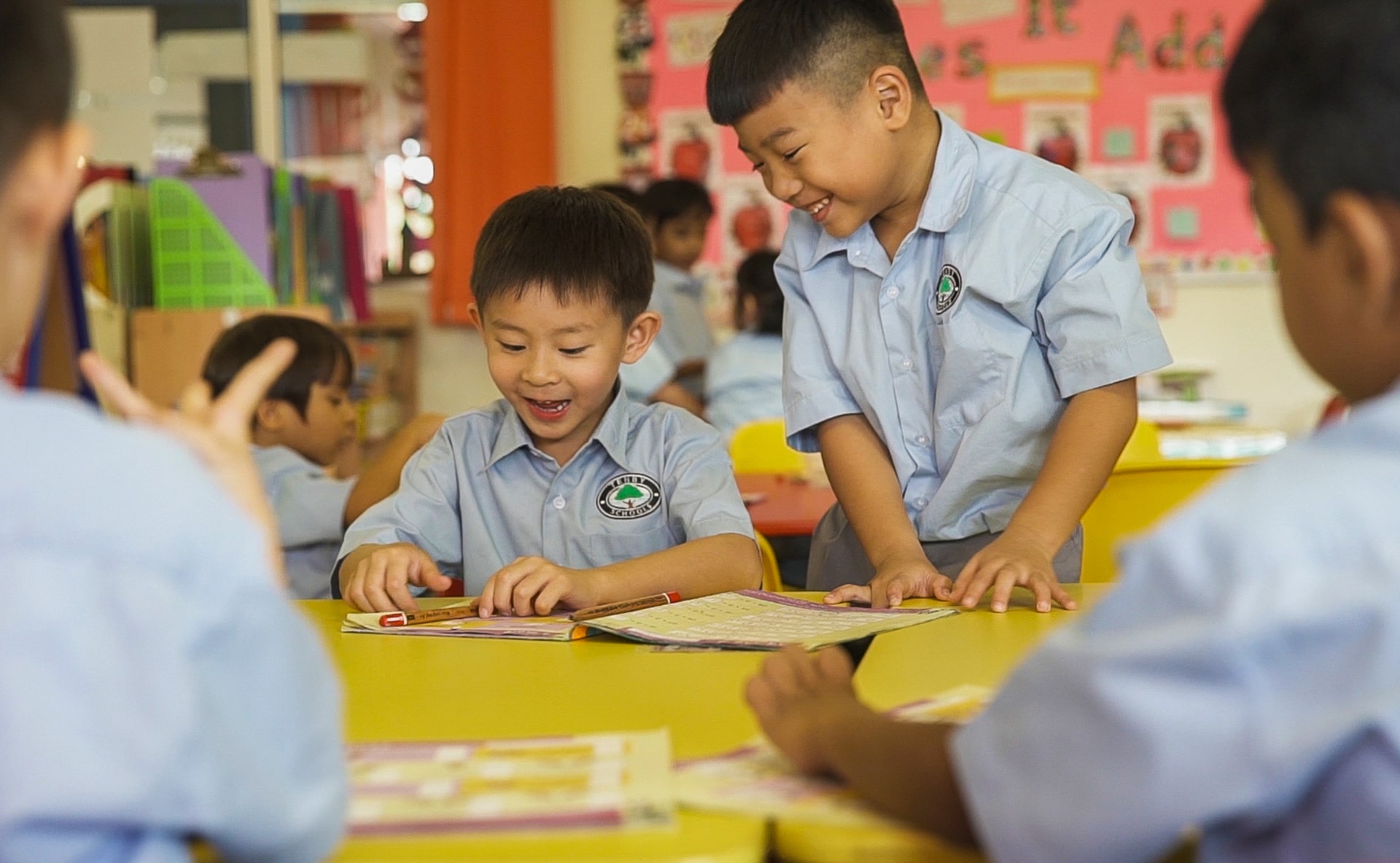
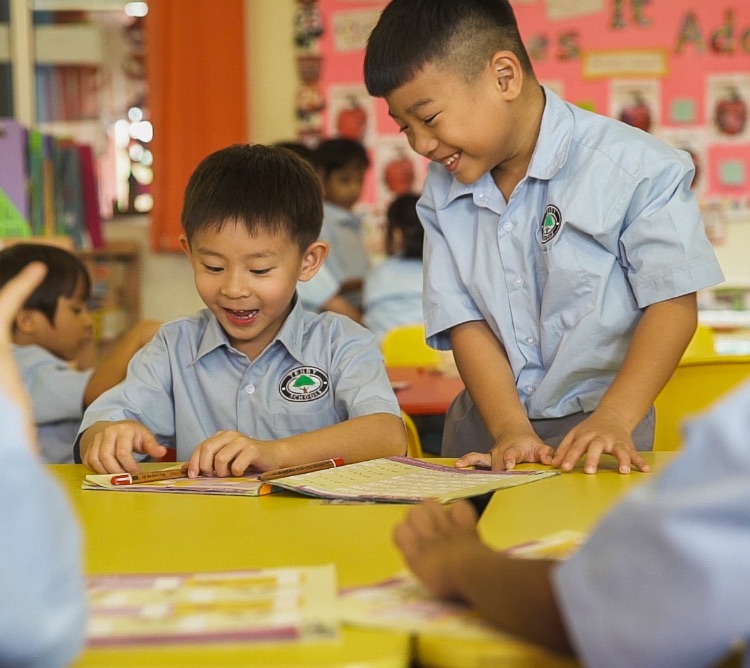
Children in the Kindergarten follow the Early Years Programme of the International Primary Curriculum based on the Foundation Stage of the National Curriculum of England. Children in the Kindergarten follow a shortened school day (8:30 a.m. to 12:30 p.m.). The main focus of our programme is learning through activity and play. We adopt a hands-on approach to learning which allows children to have fun exploring the world, while developing their physical, cognitive and social skills in a creative way. While this programme allows for learning through play, it prepares the child for entry into the more formal setting of Junior School. There is a structured programme through which the teacher monitors and tracks the progress of each individual child.

International Primary Curriculum (IPC) Key Stage 1 & 2

The Infant and Junior school currently uses the International Primary Curriculum (IPC) for teaching and learning. The IPC is based on the British National Curriculum (BNC) which has been internationalised to suit the changing trend of learners cultural backgrounds, especially in International Schools around the world. The IPC is a curriculum that develops children is learning in terms of the:

  • knowledge they should acquire
  • skills they should be able to accomplish
  • understanding they should develop

The IPC addresses the development of knowledge, skills and understanding in three key areas:

  • Subject
  • Personal development
  • International understanding

The Curriculum is set out as below:

a. Early Years (3 - 5 years), Pre-School / Kindergarten
b. Main programme (5 - 11 years), Year 1 – Year 6

  • Mile Post 1 (5 - 7 years)
  • Mile Post 2 (7 - 9 years)
  • Mile Post 3 (9 - 11 years)

The International Primary Curriculum is particularly effective as it:

  • focuses on creating lifelong learners
  • promotes brain friendly learning
  • incorporates Multiple Intelligences
  • includes International goals
  • develops links with host and home countries
  • connects independence and interdependence
  • engages emotions in learning

Subjects taught are

  • English
  • Malay Language
  • Chinese Language
  • Mathematics
  • Science
  • Art
  • Humanities (History & Geography)
  • Information and Communication Technology (ICT)
  • Music
  • Moral / Islamic Studies
  • Personal Social Health Education
  • Physical Education

Term 1 2009/10 IPC Units (Please click to download)


Term 3 2009/10 IPC Units (Please click to download)


Cambridge Lower Secondary Programme (Key Stage 3), Year 7 - 9

The Cambridge Lower Secondary Programme is a framework for students approximately 11 – 14 years old. The Lower Secondary Programme has been developed to link with the Cambridge International Primary Programme and provides standardised tests to allow careful monitoring of progress from primary to lower secondary phases. It also provides excellent preparation for students embarking on IGCSE courses.

It builds on the primary stage, and develops children’s knowledge and skills in Mathematics, English and Science. Lower Secondary also offers schools a means of tracking student progress through the lower secondary phase, with an integrated package of teaching, learning and assessment materials.

At the end of Lower Secondary, students sit the Cambridge Checkpoint tests which provide detailed feedback on students’ strength and weaknesses before they move into the 14 - 16 / IGCSE stage.
Cambridge Checkpoint tests are standardised, set and marked by CIE, so provide an international benchmark of student achievement enabling teachers to advise students and parents of the suitability of different progression routes.

Subjects taught are:

  • English
  • Malay Language
  • Mathematics
  • Science
  • History
  • Geography
  • Art
  • Moral / Islamic Studies
  • Information and Communication Technology (ICT)
  • Physical Education

Secondary Term 3 Curriculum Details (Please click to download)


International General Certificate of Secondary Education (IGCSE) and International Certificate of Education (ICE), Year 10 - 11

The International General Certificate of Secondary Education, or IGCSE, is an international qualification for school students. The IGCSE is typically taken by 14 - 16 year olds, and it prepares students for further academic work, including progression to A Level, AS Level study and the IB Diploma Programme.

Cambridge IGCSE provides a broad study programme and covers subjects from different areas of study: Languages, Humanities, Social Sciences, Mathematics, Creative, Technical and Vocational Studies. With a choice of Core and Extended papers in most subjects, IGCSE is suitable for students of different ability levels. Some IGCSE subjects can be taken with or without coursework, making it suitable for schools with less specialised staff.

The IGCSE allows teaching to be placed in a localised context, making it relevant in different regions. It is intended to be suitable for students whose first language may not be English and this is acknowledged throughout the examination progress.

Cambridge ICE is the group award of the International General Certificate of Secondary Education (IGCSE) and requires the study of subjects drawn from the five different IGCSE subject groups. It gives schools the opportunity to benefit from offering a broad and balanced curriculum by recognizing the achievements of students who pass examinations in at least seven subjects, including two languages, and one subject from each of the other subject groups.

Cambridge International Certificate of education (ICE) is the group award of the IGCSE and requires the study of subjects drawn from the five different IGCSE subject groups. It shows that the student has achieved success on a broad and balanced curriculum. To achieve the ICE students have to pass IGCSE examinations in at least seven subjects, including two languages, mathematics, a humanities subject, a science and a creative, technical or vocational subject.
At Tenby International School all students at Key Stage 4 will follow IGCSE courses in English (first or second language), mathematics, at least one science (biology, chemistry, physics or ‘Double Award Science’), ICT, at least one language other than English (for Malaysian students Bahasa Malaysia is compulsory) and up to five further subjects.